
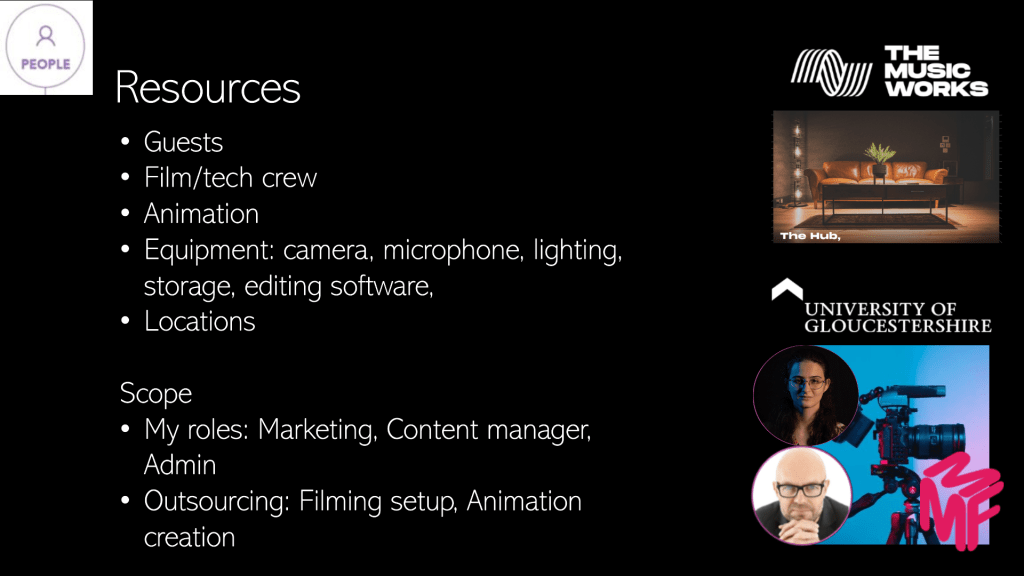
The list of outsourcing and resources at the beginning of the project looked like this:
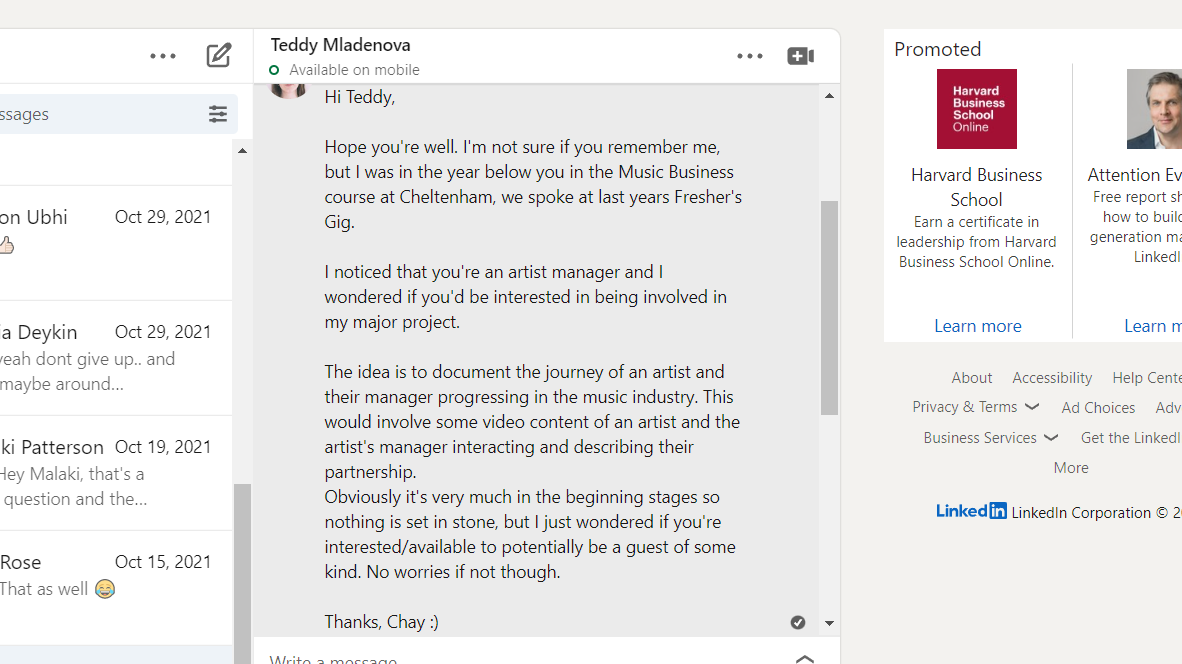
The first step was to find the guests for the series, an artist and manager that would be willing to participate and would add some character to the project. Having known that Teddy from the year above was interested in management and had been a part of the MMF, I contacted her with my pitch. Teddy was very helpful and sent an ad to her network of managers.
Eventually we came across Emma Louise, manager of indie/alt-rock band Spitfire Tides.
We set up a zoom call to discuss the idea and our motives behind going ahead with it.
Emma expressed her interest in promoting the band through the series and we mutually agreed that this series fitted our best interests. Emma had asked for a document to present to the band, so I made a document that summarises the basic info, motivations and requirements for the series (this can be found here).
This made me realise that in future a proposal document is essential and helps in showcasing my vision to partners and stakeholders, something that could be more dominant area of any future endevours with Artist Avenues.
Emma invited me to come to their gig in Zed Alley in Bristol to get some content. I saw this as a great opportunity to meet her and the band in person to get a sense of how their personalities would come across in the series and to see if they would be engaging to watch. Emma was keen to get some footage of that gig, but at this point I didn’t have a videographer in place so I took on the responsibility myself. I hired out a camera from the kit store at uni and did some research on best practices for filming a live band.
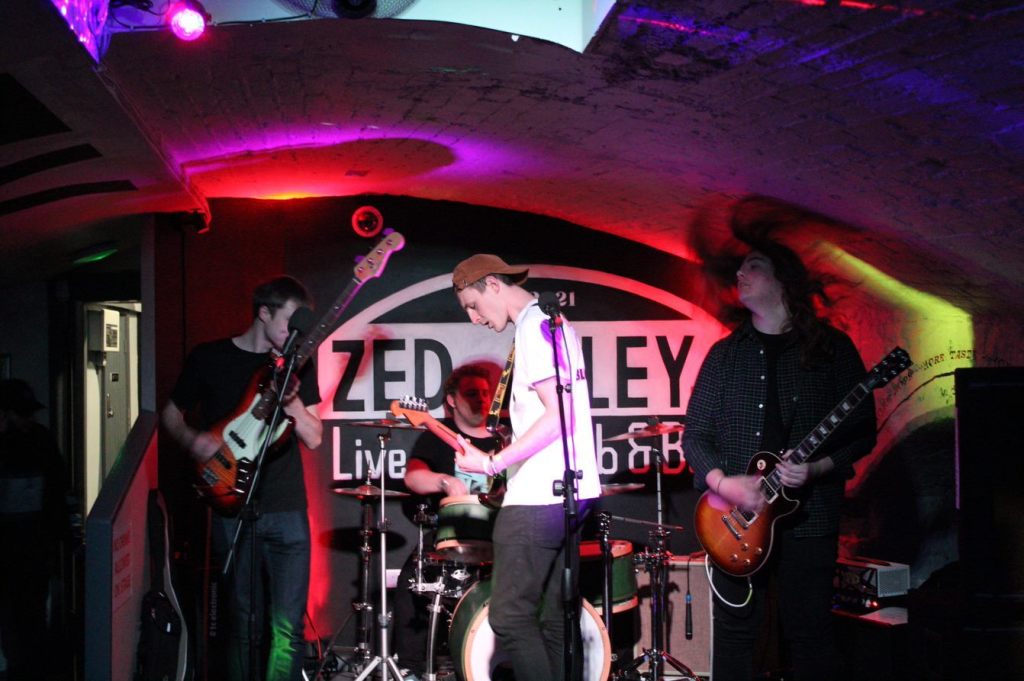
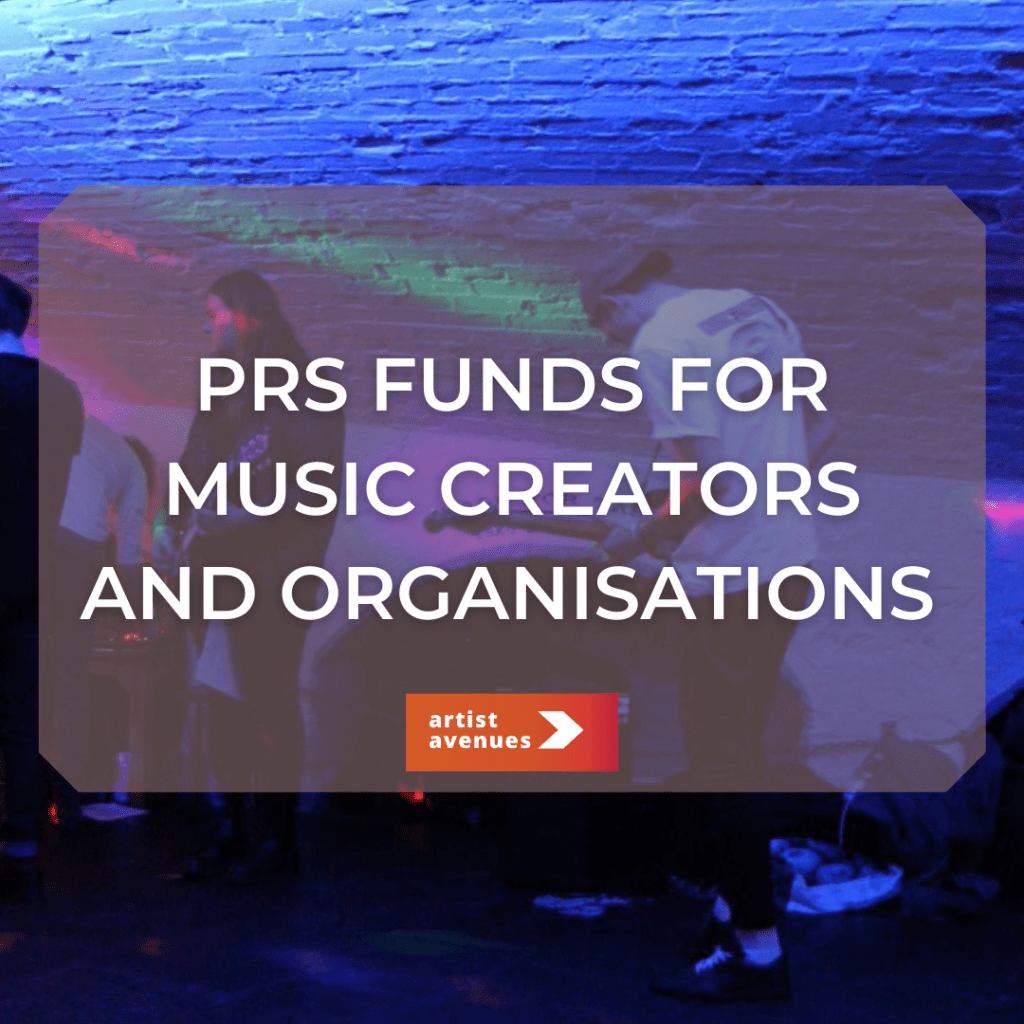
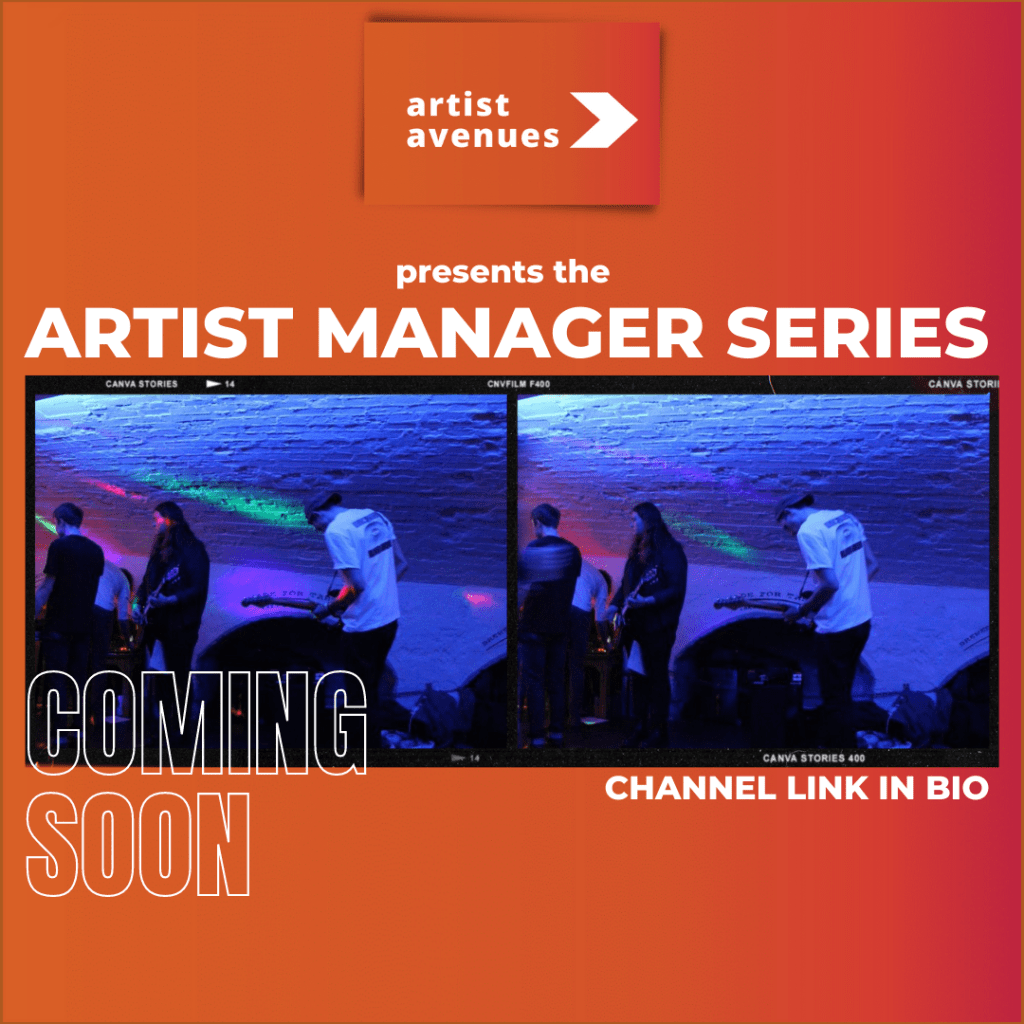
Although the video footage wasn’t at the quality I was aiming for, the footage and images I had gathered were very useful for promotion assets. Without engaging promotional assets you can’t catch the attention of your audience, so having images and videos became increasingly important throughout the project. You can see in the examples below how I ended up using one of the assets.
After this meeting, and seeing the quality of my footage, I started looking for videographers.
I found my videographers by once again asking the people I knew, this time I asked Megan who I knew had recruited videographers for the OTB events. I found this was an effective route to go as it meant that my videographer would have more experience filming live bands.
The videographer I recruited was called Nate.
When I confirmed that Nate would be willing to help. I went ahead with building plan for film dates for Emma.
One idea she mentioned was coming to the studio with them, but this plan ended up falling flat with COVID restrictions hitting the studios and limiting the number of people allowed in.
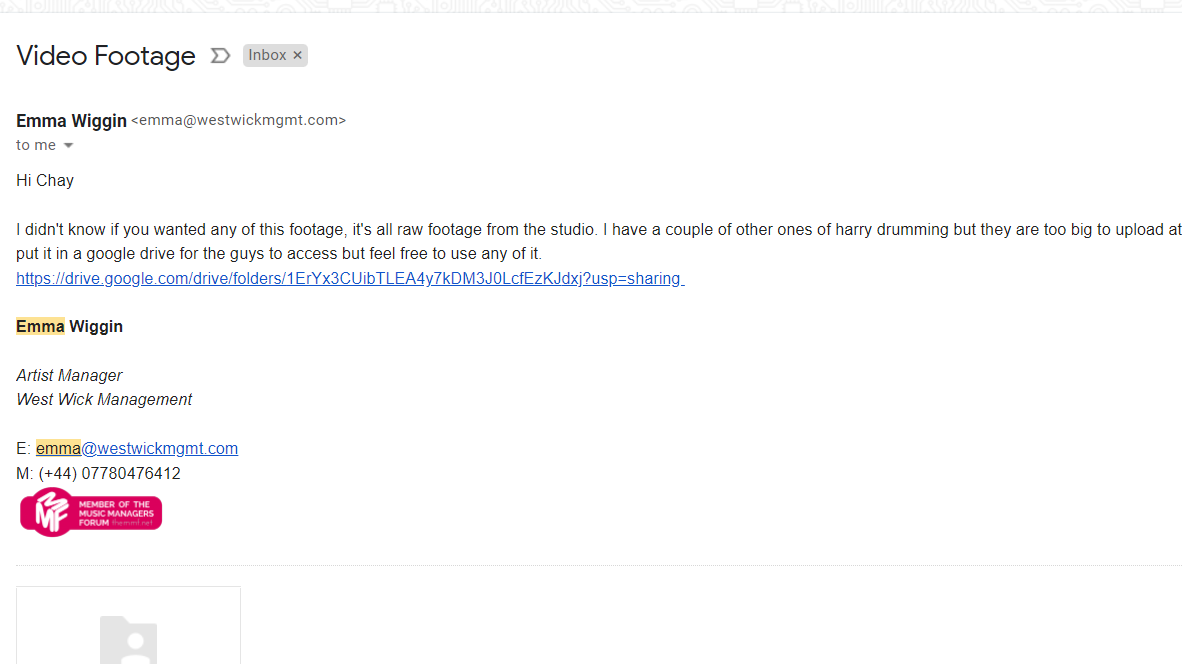
Luckily Emma had taken some of her own footage at the studio that she shared with me, that ended becoming a significant part of episode two.
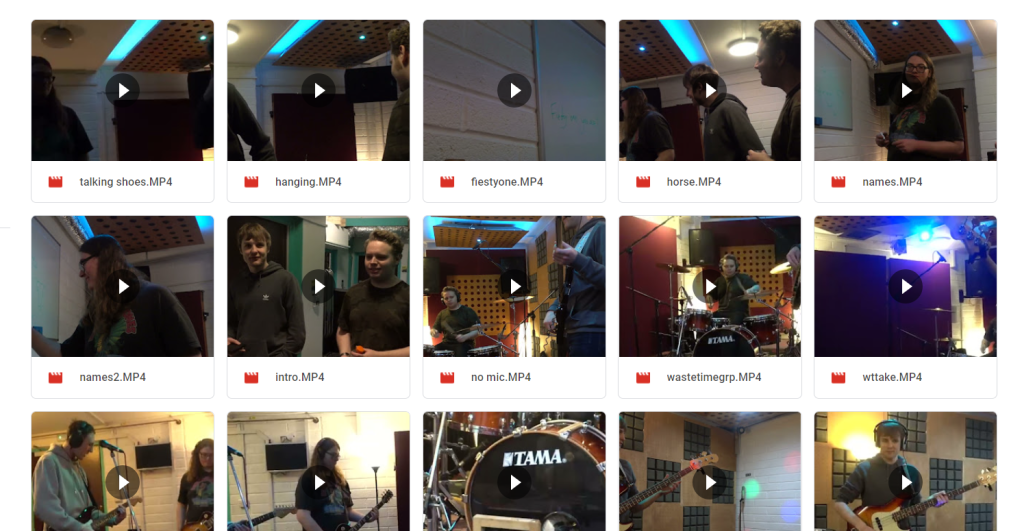
The first piece of footage I wanted to get was Emma’s interview, this was so that I could gain more info about the context around her relationship with the band. I wanted to know what information I could build on in the series. It was also a good way to understand her viewpoint before viewing her approach towards the band first-hand.
After negotiating with dates and locations, we agreed to have her come to Park Campus in early February for an interview. We filmed in the film studio on campus and it went well.
As time went on, we scheduled more filming dates around the schedule of the band. Most of the comms surrounding these dates involved emailing emma and messaging the film guys on IG.
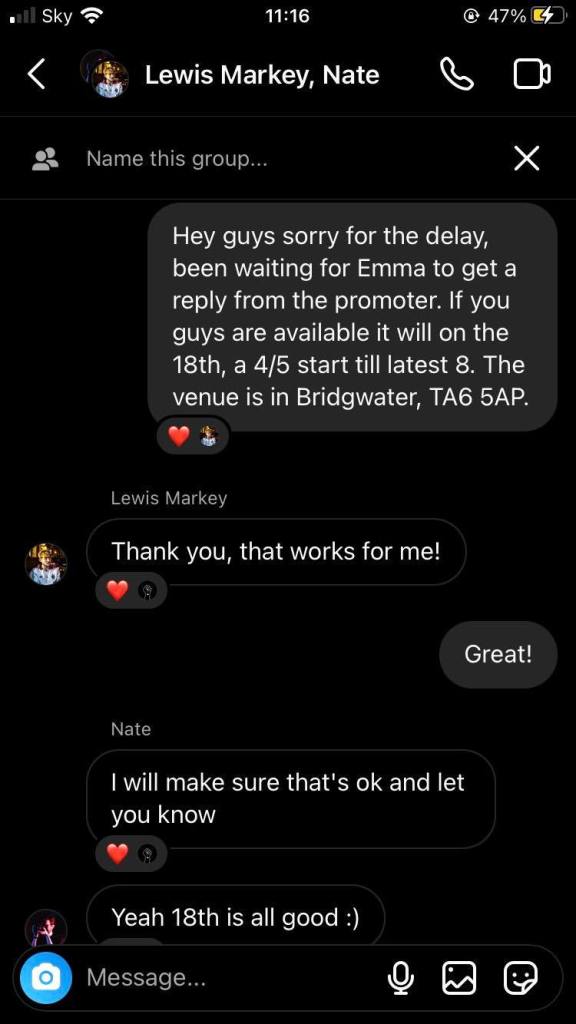
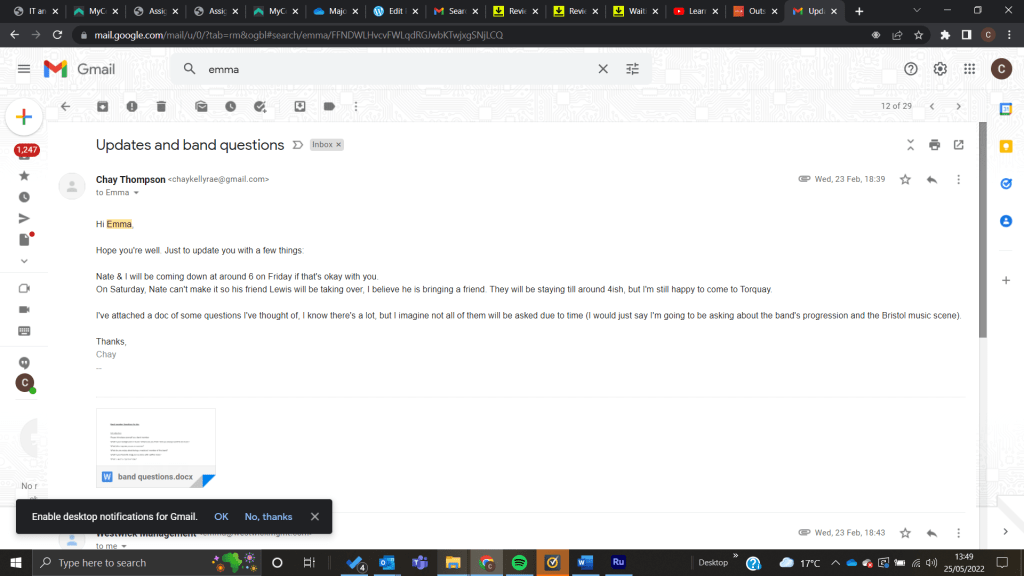
On the date of the band’s interview, the 26th of February, Nate actually had said last minute that he wasn’t available. On the positive side though, he found someone else to take over, and this brought a new person on to the team: Lewis.
Reflective thoughts
The outsourcing of responsible and organised individuals ensured that the project was carried out successfully. I used my existing network to find the team that I worked on this project with, and this meant that mean communication was seamless throughout. Another reason for the efficient organisation skills was our group ability to be able to talk through the band’s plans when we met up for our next filming dates.
In terms of logistics, I think this project has me realize that my organizational and leadership abilities are actually a strength of mine. I made sure that everything scheduled on the series side went to plan, and there was no confusion on anyone’s side. Part of this success was thanks to consistent use of Microsoft To-Do, an app that helps organise my tasks and set reminders throughout the project. I worked well communicating, negotiating and directing the series guests, and the film guys to a point where there were no hiccups on that side. I scheduled the filming process from December to March and we managed to get the content we needed over that time.
 ARTIST AVENUES
Leave a comment