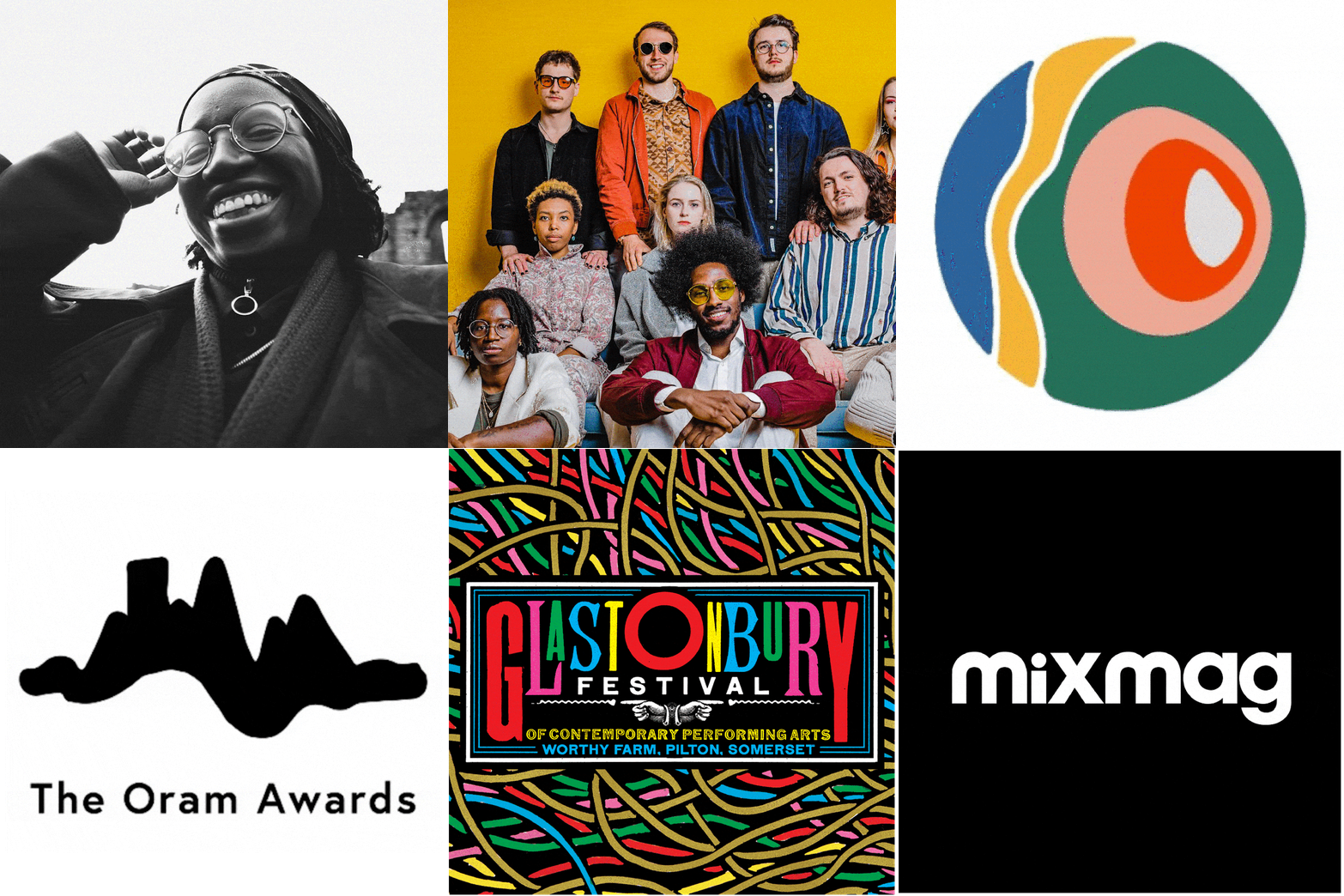
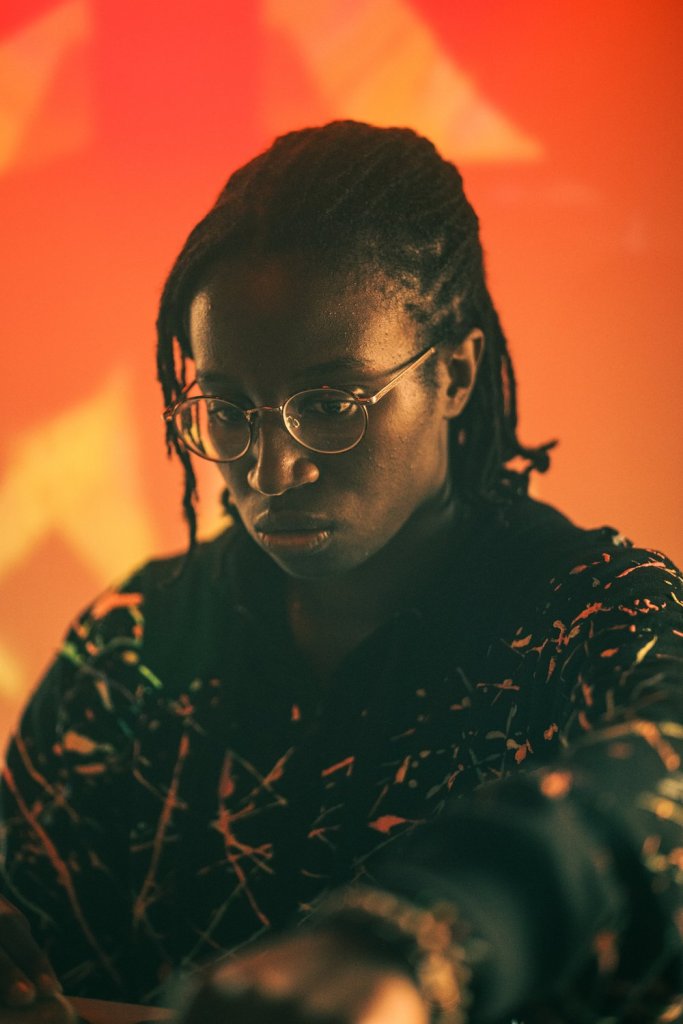
- NikNak is a music creative, experimenting with turntablism and sound design, as well as contributing to theatre productions.
- In 2020, NikNak became the first Black Turntablist to win an Oram Award.
- As a DJ, she/they has performed alongside well-known artists like Mr Scruff, Craig Charles, and Grandmaster Flash and has performed at renowned events such as Glastonbury, Berghain, and Dimensions.
- NikNak is part of Eve’sDropCollective and TC And The Groove family.
- They’re the creator of “The Narrative” podcast.
- They have hosted radio shows like “Melanin” on Worldwide FM and “Dystopia” on Refuge Worldwide.
Hey, thanks for coming on! So what have you been up to recently?
I’ve been recovering from the festival season because it’s been quite ridiculous and, enjoying the weather. Also kind of getting ready for autumn and winter in terms of like, gigs and things. So, It’s been, pretty cool.
I was at some with the band that I’m in, which is TC & the Groove Family, I’m on the turntables and I do backing vocals as well. We did a run of festivals including Kendall Calling, Green Man, Boomtown and a whole bunch more. Then I did a DJ set at We out Here Festival and also kind of various places in between those ones too. I was kind of all over the place with the band as well as my own stuff.
What can you tell me about your music?
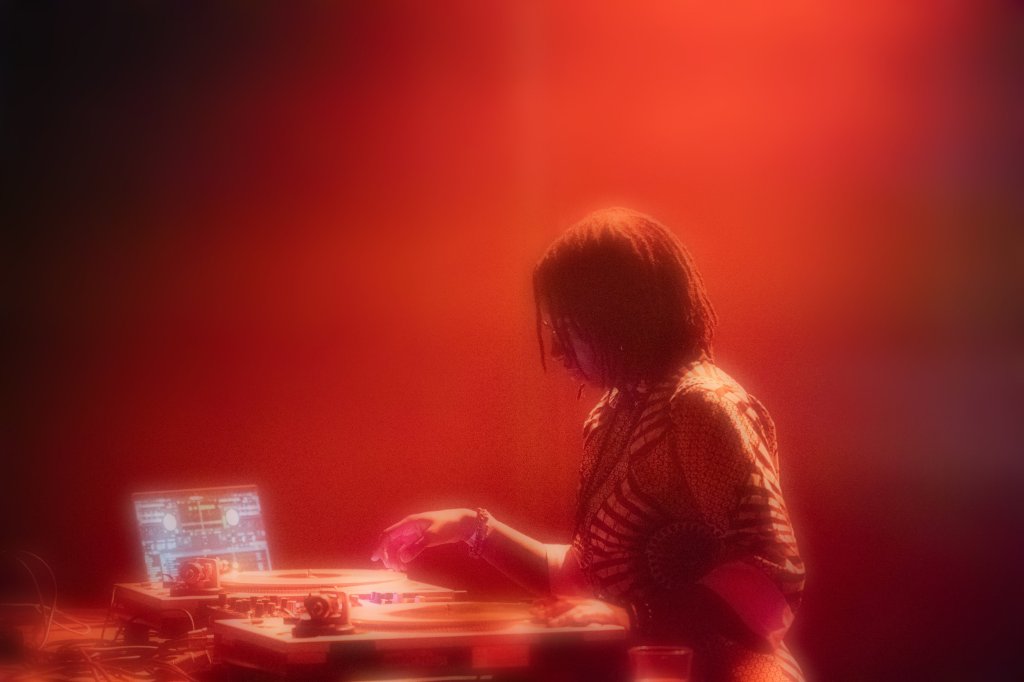
I move between genres I think I don’t really stick to one thing. The music that I make as a solo artist has been more experimental and ambient in recent years, like using a lot of field recordings and live manipulation on turntables and turning that into something completely different.
I’ve been doing some work in like spatial audio as well, so kind of bringing that aspect into it. With the band, because we’re a ten piece, has influences from like Jazz to Jungle to Afro beats to Afro funk and Hip Hop.
I wouldn’t say that I’m an ambient producer or anything like that, I just I make music and whatever comes out of my head. I’ve done stuff from like supporting Grandmaster Flash and Princess Nokia to playing at like a, at carnival on a big sound system and like I’ve played like the odd, like House or Techno set or Garage set. There’s no specific place that you can put me.
Can you tell me the story of how you became an artist?
I grew up in North London and then I went to uni, I did my undergrad in Leicester and then stayed there for a couple of years. I started like I guess professionally DJ’ing in the middle of my degree then, and then stayed for a couple of years. In 2016 I moved to Leeds to do my master’s and I’ve been there ever since.
Did the DJing and Turntablism did that come about when you were in London still and growing up?
So there was a point in time where like I was in college and I was kind of like just playing about with DJing and stuff. It was like, “this would be a cool thing to do, but I would almost certainly have to work like a full time job at the same time as doing it”, sort of thing.
Then I got my first proper gig without like, asking a tutor or anything like that. I got my first proper gig when I was in Leicester studying. At the bar that I worked at at the time, there was like a Friday night, like Hip Hop and Breaks, club night that was running. A lot of the guys would come in and play, and I’d be like collecting glasses on the night.
I would just peek over the DJ booth and see them doing some, like, crazy stuff, and I was like, “I want to do that. That’s what I want to do.”
So then at one point, I asked the the main guy running the night who is who’s called Dan I asked him if I could play and he was like “Yeah, yeah, of course”. So I brought a controller down, and we just went back-to-back for six hours. He was like “Okay, cool, yeah, you’re in the group”, I was like, “Okay, great. Thank you”. It soon led to me to like not working behind the bar anymore and just being like a resident DJ there, and then later on putting on my own nights and it kind of went from there.
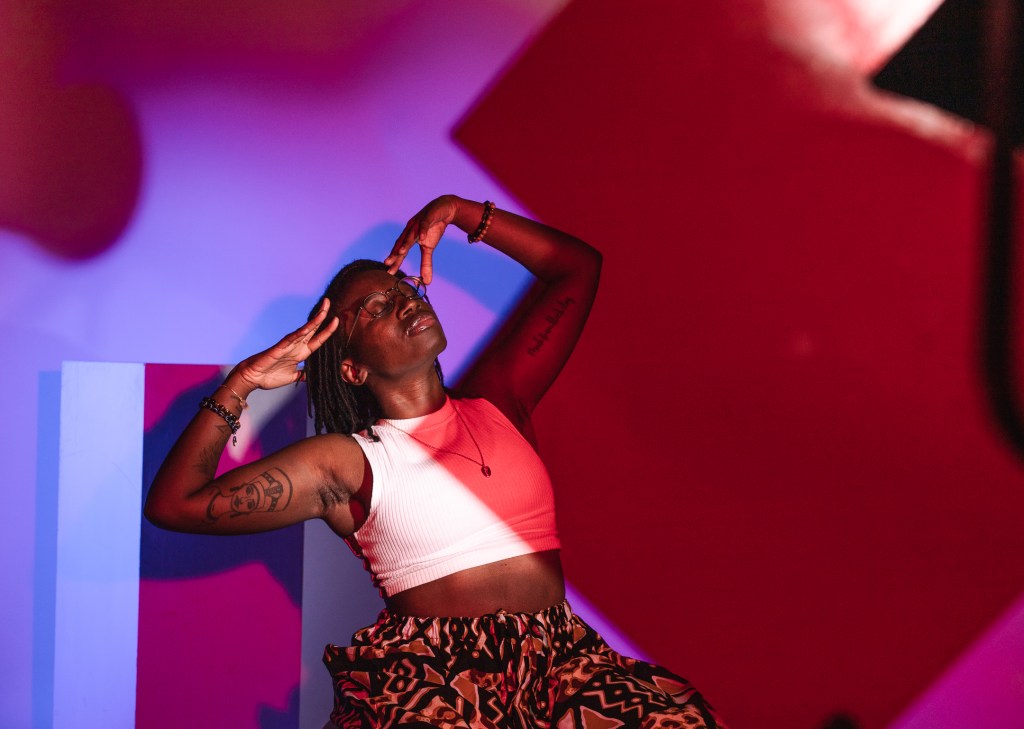
The Turntablism stuff was also around the same time, but in in the more academic sense. I remember a guest lecturer came in, her name was Sophy Smith and she was talking about Turntablism. She mentioned these people like Shiva Feshareki, Pierre Schaeffer and John Cage and stuff, and it blew my mind.
I was it was kind of like a real mish-mash of both of those things happening around the same time and, and also studying and putting that all together in my own way, it kind of just went from there.
I focused more on DJing than the scratching part for a while, and then, and then a few years later I kind of just said, “No, I am a turntablist”. Imposter syndrome had had me in a chokehold for a little bit and then I was just like “I’m not dealing with this. I am a turntablist let’s not mess about”.
Then I was in uni in Leeds. I did a residency with Shiva Feshareki with a number of other like really dope, female trans and non-binary artists and that also blew my mind. And it was like, “No, I definitely am in the right place. I’m not going to stop from I’m not going to shy away from like what my calling is”.
Would you say that the university environment has helped you come into your own?
In my case, because I can only speak on my experience, it really was helpful for me to get a real, wider sense of what music could be and what it could sound like. Up until that point, I was very much like, and again, nothing wrong with this, but, “Oh, I just want to make beats, do stuff like how Timbaland does it”. I had a very commercial sort of mind frame – like this is the kind of music made.
Going to uni really helped me to see that there’s a whole other world besides that where music is commercial. There’s other elements to it that I didn’t think of while I was in college. It really did help me to understand, like more of the different ways in which people make music and how I could, given the sort of music that I grew up with and listened to like on a on a daily basis and stuff, how that could all feed into my expression when I come to make music.
I wouldn’t have kind of become interested in like spatial stuff too, like doing stuff in surround sound and thinking of music outside of just stereo. It’s been very, very, formative for me in my career, but like I say, it’s different for everybody.
What were the next steps for you after your master’s?
The next step was just put into practice what I had done while studying outside of studying, because I think that uni can sometimes pose as a kind of barrier to people that want to experience different kinds of performances or whatever. So I was kind of like, “Well, let’s, let’s try and do that”, and some funding came my way, which allowed me to be able to do that, which I’m very thankful for.
Lockdown happened during my masters and that was when I started the podcast, which is about like just chatting to other black non-male creatives about their practices and just what they do. I have not had the time since lockdown ended to be able to continue it, which is a shame, but it’s there. I did that, I did the thing, so it’s all good.
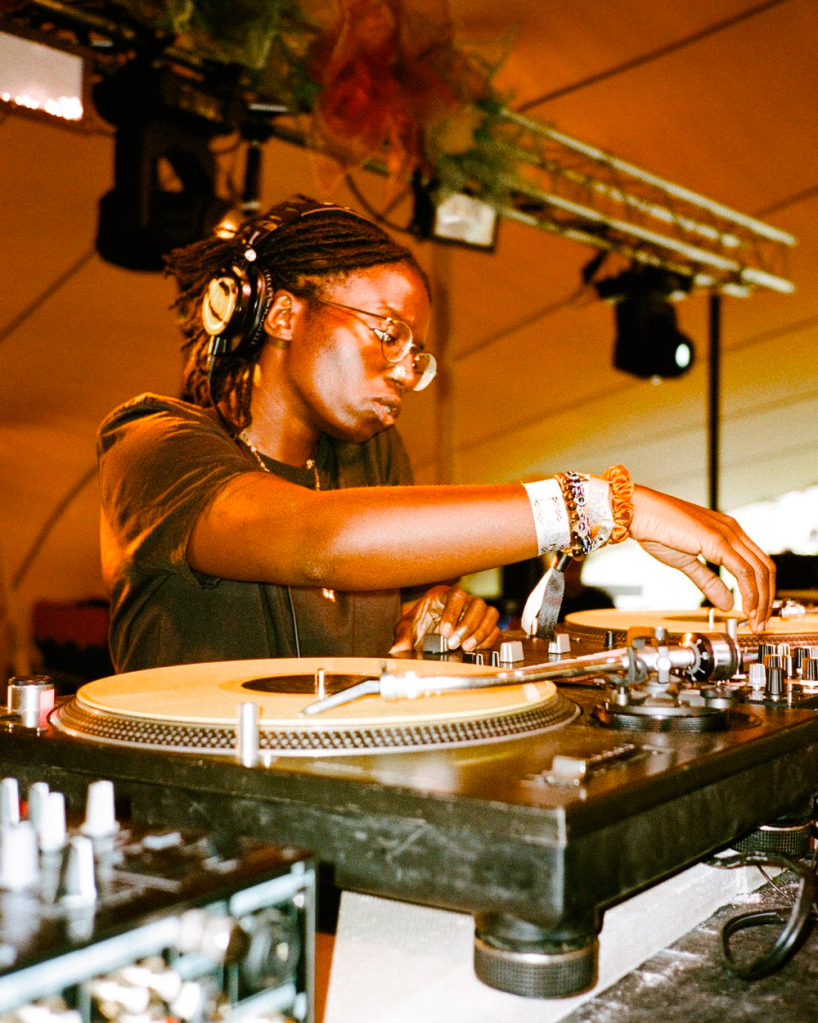
During my masters, I also managed to get onto radio. I did stuff with the BBC, I had a show on Worldwide FM for about two years. Depending on when this goes out, I’ll be returning to radio soon as well. So a lot happened in the kind of interim between like sort of finishing my masters and when lockdown ended.
I was able to get into like sound design for theatre as well and composing for theatre shows. A lot has happened in like a very short amount of time and it’s been, it’s been intense, but I’m not complaining and it beats like working in an office with people talking about mortgages.
So to be able to provide opportunities for not only myself, but for, like, good friends of mine who’ve been able to support and help me with my wacky ideas has been really something. It really means a lot to me. Like it’s been a wild ride thus far and I’m very, very grateful..
Were you doing all of this yourself or did you get help along the way?
So I’ve been really blessed to be a part of various talent development initiatives. In particular, an organisation called Launchpad that helped me to release my first album ‘Bashi’.
The funding that I mentioned before came through Sound UK and their Sound Generator Programme, I also had some Arts Council Funding come through. It all gave me the confidence to go “I’m just gonna put this out and do this”. I’m also really grateful to the insanely creative friends that were like “Yeah man, we’ll help you”.
Even getting in contact with labels, or labels that have gotten in contact with me saying “yeah, we’d like to put out your stuff”. ‘Bashi’ for example I released myself, and Kynant Records got in touch and released Bashi X2. I’m so grateful to have worked with them, and other labels like First Terrace, Come Play With Me and Nonclassical. ‘Sankofa’ was made with the research I was doing with Sound Generator and Arts Council, which turned into my very first tour with visual artists, that was released on a label called Inventing Waves.
How how do you manage to balance all of this and stay grounded or not get overwhelmed?
It’s something that I’m learning and relearning. I haven’t mastered it by any means necessary, but I am better at it than I was like a few years ago.
Last year it was like the busiest year like I’d ever had: so many solo gigs, the band, we just released our album ‘First Home’, and that meant like doing a ridiculous run of festivals and really trying it, but also trying to like recover from lockdown because that took a toll on everyone.
So everybody’s energy was just messed up after such a long time being at home. I was also deemed vulnerable when it comes to Covid, so I had to take extra precaution when kind of being around so many people. I had my tour, I had sound design work, I had like remote work. I had the, the band tour all happen in very quick succession, one after the other, and it was intense. By the time that it was like, say, November last year, I kind of actually was able to fully relax and it was like, ‘I don’t want to do that again”. That was very just non-stop, like ridiculously. It shouldn’t have taken me up until, say, November, December of last year to go, “Oh, I can relax now, I’ve been working all of this time”. No, we’re not doing that.
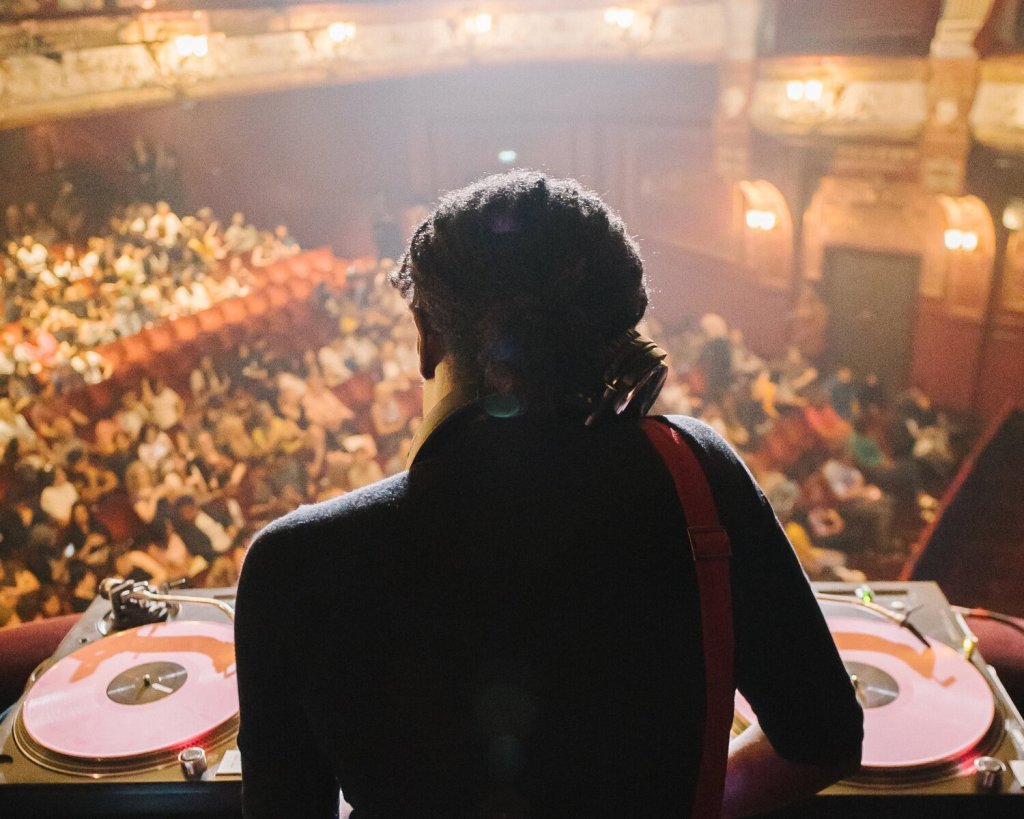
I kind of had to say to certain people, you know, “when it’s this like a certain time of the year, for example, like, please don’t expect me to drop everything and come over because I can’t. I need to rest”. My rest looks different to other people’s rest, but it’s like, I need that time and if I’m going to be like able to do an insane festival run again, for example, I need to prioritise that.
I kind of said that to other people that I was working with as well. I’m kind of stricter on myself now when it comes to that, to be able to properly schedule in time to rest and not budging on it.
Those opportunities will come around again and, you know, it’s just you need to be able to sleep. So other things as well like health and stuff too, but it’s like I have to take notice of that. I am getting older and like, so what does that look like? Like things might change very quickly or very slowly, but I need to keep an eye on that; diet, exercise, mental health, all of that is very, very important to me, especially after last year and how ridiculous it was and how topsy-turvy my mental health was.
What do you think of like the music ecosystem in Leeds?
The scene in Leeds is very interesting. It’s very bubbling. It’s busier than people realise. I think one thing that needs to change with Leeds is this weird reliance on the student population.
So in in Leeds there’s a good chunk of the population just there within those 5 or 6 universities. When it’s September to May, it’s busy and there is like I’d say like a fairly healthy selection of nights that you can go to in a week, let alone a day in the city, but then once summer hits, it dips, and it is a very significant dip. I get it because, there’s more people so there’s a bigger chance of getting more tickets sold and stuff, but for the people that aren’t students, there’s a bit more pressure in some way for you to potentially put on a night, or like to really try and find something that you want to go to. I get it, sometimes like, it’s festival season, so everybody’s putting their money towards festivals, which yeah, makes sense.
I think this can probably be said by other places as well, but like I think people just need to remember that like a lot of the acts that you eventually do see at a festival started somewhere locally, so you need to be able to support the local ecosystem as well and like and really bolster that because that will help the scene and the people within that scene get on to bigger and better things in the future.
Leeds is very vibrant, and there’s a lot of different like styles of music here that, that are building their own ecosystems and like connections being made between like collectives and stuff and joint nights and all of this stuff. It’s really, really wonderful to see and also to be a part of. I think it’s more a case of people realising that like, you know, we don’t, you don’t need to necessarily rely on the student population, to do something.
Notting Hill Carnival is a really good example, and that’s on a bank holiday in August at the same time as like Shambala festival and that. The need for more like diverse, collectives and line-ups and things as well, that’s always a priority for me personally. Like when I run and I try and make it as authentically diverse as possible. So people need to also support that too.
What do you think artists need more than anything nowadays?
I think artists need to be given permission to experiment with their sounds right. I think there’s there tends to be a kind of a pigeonholing of like, “Oh, you do this. So that means you’re this style of music”, and it’s like, no, “I can be whatever”. Pigeonholing can hurt sometimes more than help the artist. Especially when it’s happening without the artists like consent in a way, like their team or whoever is like immediately saying, you make this and you know, the artist might feel otherwise.
Another thing is there is no one set way of doing anything, it’s all experimentation at the end of the day. Being able to have people around you that can not only support you, but can see that you’re doing something different than everyone else is something that will stick with you.
At one point I did a performance and a guy decided to tell me everything he didn’t like about it. Once upon a time that would’ve really upset me, but when it happened I kind of just zoned out and was just like “Okay thanks bye”, but he still stayed for my whole set.
It’s having the confidence to go stand your ground and not take on unwanted opinions. If people at any stage had the confidence to just go “I’m gonna make what I wanna make”, then I’d say go for it.
Everybody’s success and goals will look different, for me it’s just like if I manage to cover rent, that’s great! I think it’s important to be grateful about the things that come your way that you don’t expect.
What motivates you?
Green tea haha. One thing that motivates me is that I’m able to do a lot of things that I never saw myself doing. The unpredictability of something that could come through like a dm or an email, whatever comes my way, opportunities that inspire me. Whenever I speak to my mum she’s like “So what have you been doing this time?”, and I tell her and she’s like “Oh my god, that’s amazing” – that’s what keeps me going, the smile on my mum’s face ’cause she knows I’m doing things that I love.
What are your upcoming artist recommendations?
If you’re not aware of Ezra Project, you should really get to know them. They won the Mercury Prize, and they’re a dope collective of musicians.
Lorraine James cause obviously, as well as SEED and Lizzie Berchie.
 ARTIST AVENUES
Leave a comment