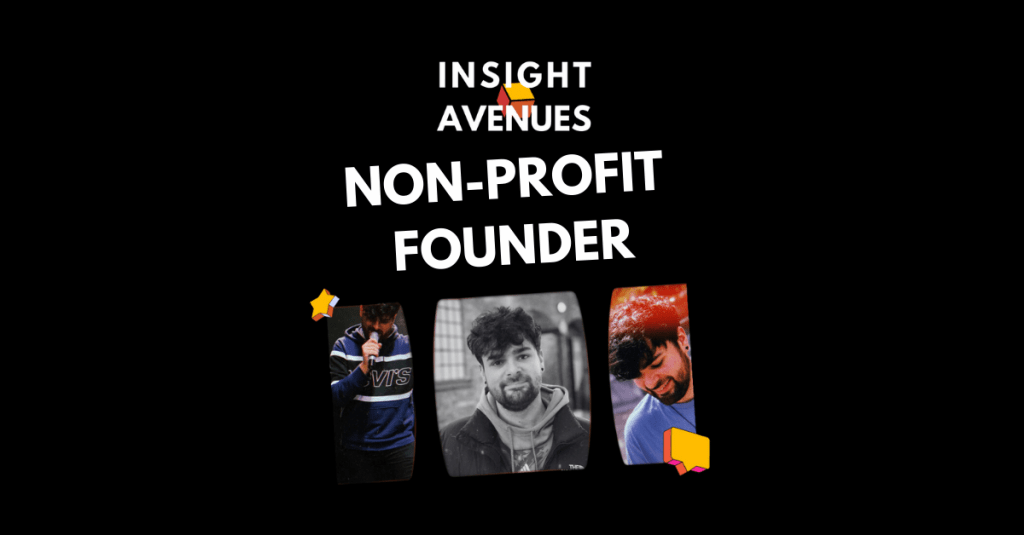
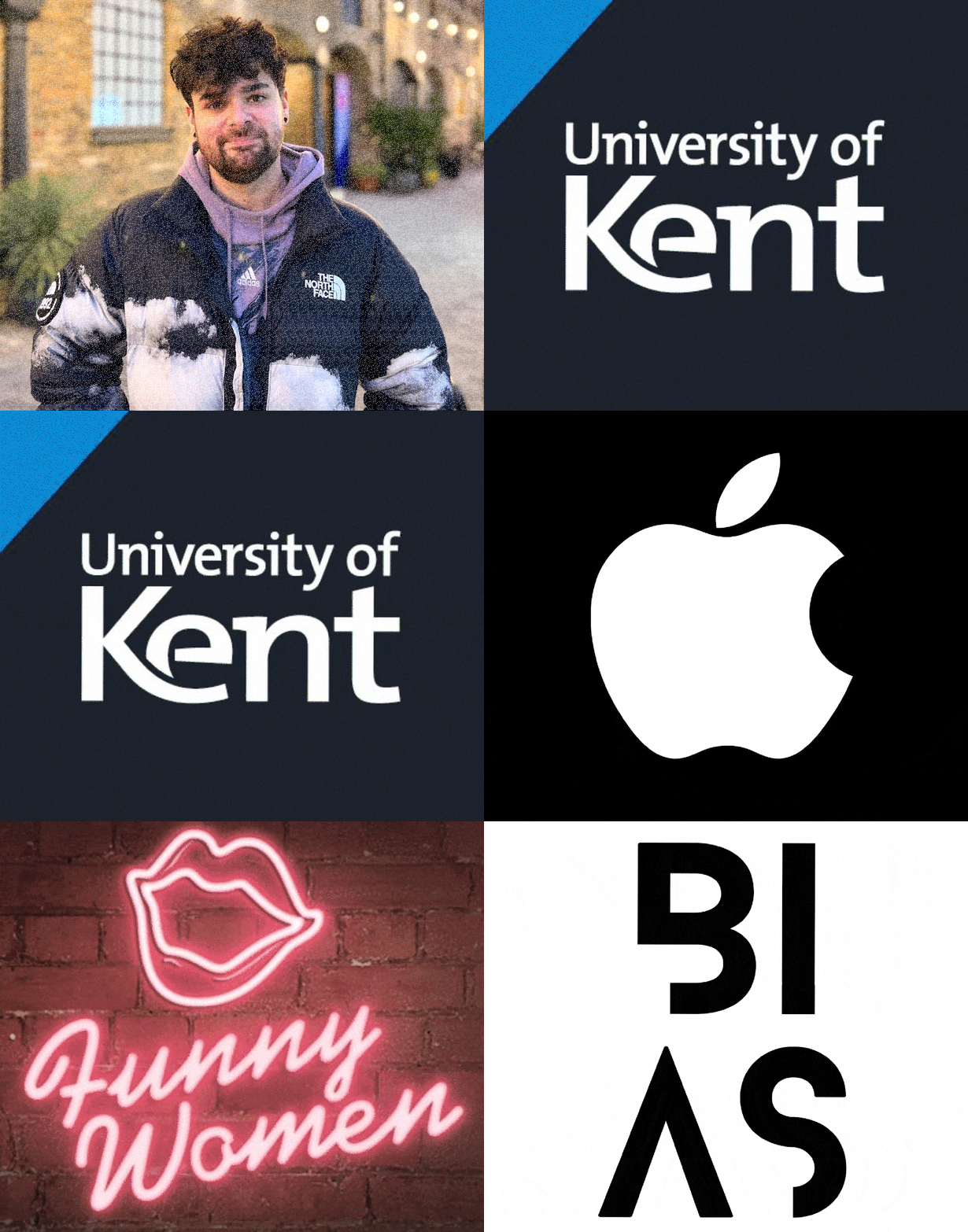
- James is the founder of London based non-profit BIAS (Burns Independent Artist Services) helping to provide mentoring, web-design and other free resources to artists.
- He has over 15 years of singing experience, 7 years of music education experience, and a degree in Music Technology. As a musician, he has a Unique knowledge of vocal technique, performance, and production.
- James is passionate about helping musicians excel and come out of their shell, regardless of their musical journey, using BIAS.
Hey James! What have you been up to recently?
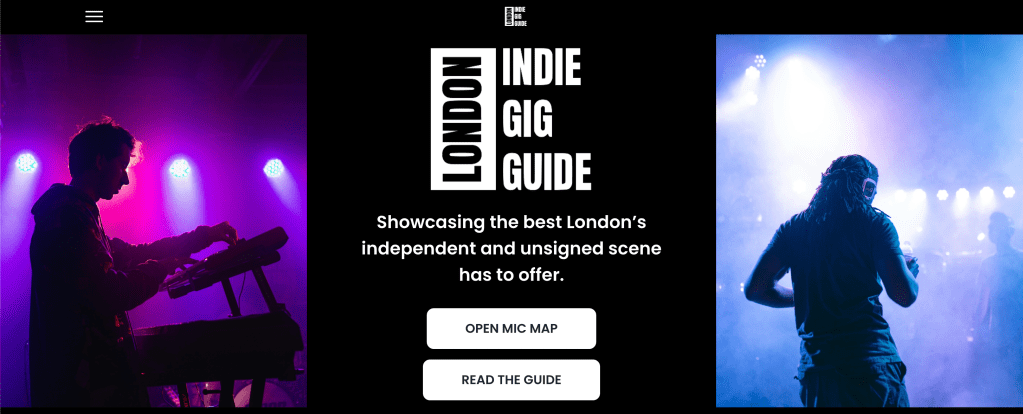
A few things, but the main thing is starting the Indie London gig guide. it’s been really nice. We’ve started recruiting some writers and we’ve got the first articles out. Getting people going out to gigs and kind of exploring the scene, hopefully starting to turn over the stone of what’s happening in London.
That’s been the most exciting thing that’s kind of going on.
Where did you start with everything you do?
It’s always been kind of like a naturally accidental evolution of everything. All of the stuff that I’m doing now has been the culmination of my passions, and the the intersection of them all really.
I’ve been a musician for the longest time. I was very lucky to have music lessons and then went to uni to study Music Production, but also my my ‘tech-nerdery’ has always always been there as well. I learned web design myself, just self taught whereas I was like actually taught music.
Then BIAS, it has had many evolutions. It was something that was initially thought of at end of 2019. I had all these good ideas that started, and then they were instantly killed in the pandemic. It was a very different thing as to what it is today, but it always started off like, “how can we help musicians to get that leg up in the music industry?”. That was always the starting thought, and how it manifested itself and changed over time.
So it’s current form, which is web design, digital services, and then all the extra free stuff, like ArtistLink, which is a Linktree alternative that’s kind of branded for musicians, and then the gig guide, it’s always been about trying to combine my loves of, music, technology, and helping people, they kind of naturally intersect.
Was it at uni were you found out that helping artists is what you wanted to do?
I don’t know, I haven’t been thinking about it ha ha. Kind of, but it’s like, for whatever reason, I’m not checking out because musicians need help. You learn at uni and go like, oh, the music industry is a bit fucked and so like, artists need help, and musicians need help. There’s always like a broad theme and it was something that was always around me.
Uni didn’t specifically help me discover that, but it was more like a personal growth, learning how to be an adult, learn more about myself, what I kind of wanted out of life, so the helping people aspect really shone through at uni.
It was mostly after graduating, and partnering up with a studio that used to run in Southampton, that was kind of the realisation of, “Oh, maybe there can be a difference here”. But yeah, that pandemic happened, it all died.

I went from Portsmouth, which was a bigger city, to the University of Kent and they had like a smaller, less loved campus in Medway. I kind of learned a little bit more about, community music and like the tiny pubs and the alive and thriving music scene, but also very much struggling at the same time.
That’s kind of what going to uni showed, showed me. Portsmouth music scene is by no means, like, the biggest, um, but it, it’s definitely got a really great community of music that goes on there which I very much under-appreciated when I lived there before going to uni.
There’s a festival that was set up by two ex students of the college that I went to, Victorious Festival which is moderately big. There’s a lot of, I’d say, like, mid sized venues, the Wedgwood Rooms & The Pyramids, which is one of those venues that every year has a petition going round that it might be closing that all the locals always constantly want to save. I’m really into the underground scene, it’s a bit under appreciated I think too.
How can BIAS help musicians and others with their career?
The thing that we’re trying to solve is, education. You get the musicians that are really savvy and that know exactly what they’re doing, and then there’s the other musicians who just want to play music, they want to focus on their craft and don’t have the information to learn another entirely new set of skills, which is totally reasonable because they’re basically being incredible musicians.
And so the problem that BIAS is trying to solve is, is mentoring people through this. You almost have to run your career as a business, which is what all unsigned musicians have to do, and to show them a pathway that is not entirely label dependent whilst also lightening the load of like, building a website for them, showing them how to get a fresh email set up and doing all that kind of stuff for them to kind of boost their credibility.
Also in an era where social media is really volatile and one day, you know, TikTok might disappear, having to create the long term relationship with your fans, that’s when we can help.
In your opinion, what do you think is the most important thing for artists to keep in mind when going forward?
Make sure to always keep that direct connection with your listeners and with your fan base because that’s the thing that carries you through difficult times. They’re the people that ultimately are going to stream your music, buy your merch, and turn up to your gig. The whole point of what BIAS does is say “hey, this is how you maintain that connection”, and you remove the people that are in the way of that, which in one case would be social media companies, in another case it could be a label.
Musicians who play and write music, not just for themselves but for others, they want a fuller room of people listening to their music – that’s how we connect with people.
For people that might want to start their own businesses, how have you found it? What’s your experience been so far?
It’s been alright! I think the thing that I found doing it by myself and then having friends and freelancers around me is that I think in hindsight, I would love to have had a co founder.
That would have been an extra thing that would have made it nice. Sometimes it’s nice to have someone that is willing to say, “Hey, that was a really shit idea”, and that you can argue with – I like being challenged. My face may not ever admit that, but I do actually like being challenged. The importance of that cannot be understated as having someone that’s willing to go, “mate, that was shit” haha, no but I’ve loved it.
My route into business and setting it up is entirely straightforward because I initially set up a like a limited company and then converted it to a CIP, which is like a non profit structure, so that was interesting. I have a lot of form filling, um, and soul searching as well about what I wanted to do and the impact that I wanted to leave. So yeah, I would say to anyone, do it, without a doubt.
How do you find the time and the motivation to do all of it?
Sometimes I don’t, is the honest answer. Sometimes you just want to bury your head in it, but I think I’m a really stubborn and quite a fiery person – my partner would probably be able to tell you.
For me, it’s always been the driving thing has been the belief in what I’m doing is a good thing. That people should, that people deserve to know, and deserve to know about.
When I start losing steam, I have a friend that I talk to a lot, that we’ve met because of BIAS. I have a chat with him, and he normally gives me the get a grip chat and will like kick me. Having a good support network, is what I’m trying to say.
Did you take your time to learn different skills in the lead up to launching or have you been going for trial and error?
A bit of both. Like, I definitely do not profess to know everything.
I like knowing things, but I used to work a little bit in social media marketing, so I’ve got that skill set, and stuff that I don’t know, I’m very comfortable to learn, or if I know someone that can do it better than me, I lean on my support network to help me do it like: I know how to social media market and content create, but I don’t like doing it so I get one of my friends to do it instead because they enjoy it. I’d much rather give something to someone that they’ll enjoy than me do it and be miserable. So yeah, all of the above, really.
What kind of skills would you recommend to someone who wants to start their own platform?
Ooh, a great question. I think self advocacy, like the ability to be able to go into a room, network with people, and talk about how great you are even if you don’t believe it. I think that’s a really underrated skill because I think you are only as strong as the people that you surround yourself with so it’s really tricky to do it alone.
As many people as you can bring in, the better. I would say that’s number one.
And then also, looking after yourself. The ability to know when to stop is also really important. Because if you burn yourself out, you’re going to be useless and your business will fail.
Learning when to ask for help, when to stop also as well, and I know that’s it’s apparently a political hot potato but the tories went ‘Oh, Kier Starmer’s stops working at six, that he shouldn’t be spending time with his family”, and it’s like, I’m not saying I love Keir Starmer, but great, good for him, he knows what a work life balance is. When you’re, you know, vying for Prime Minister, you need to know when to step back and look after your loved ones. So, yeah, those two things.
What services are you most proud of? And what are you most excited about achieving in the future with BIAS?
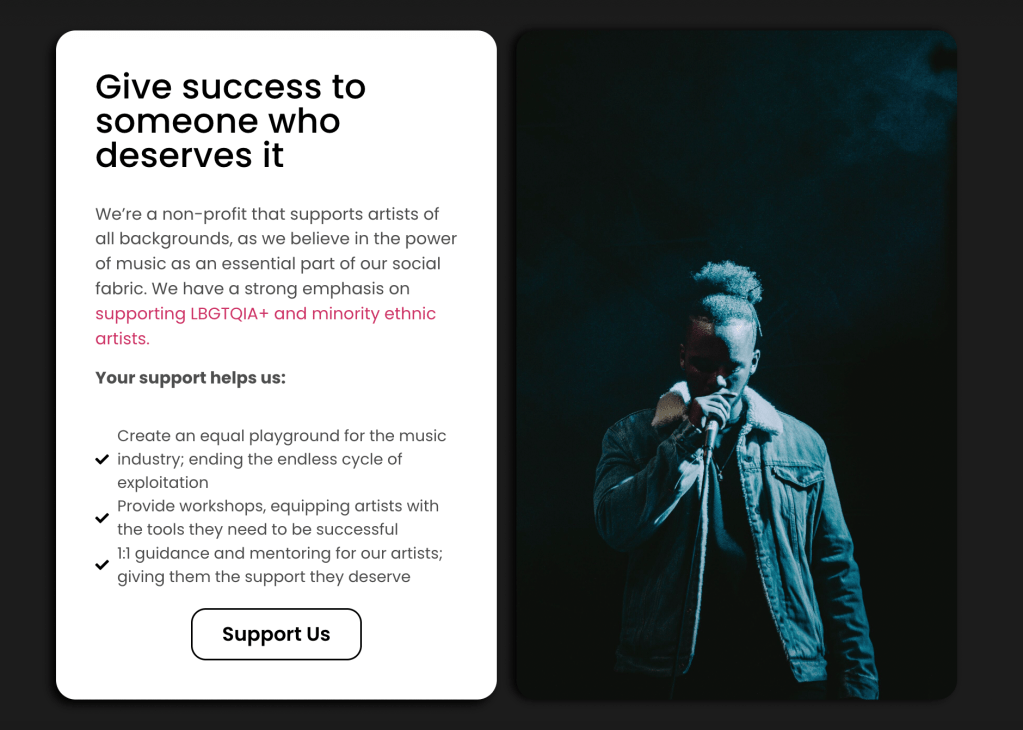
It took a lot of narrowing because BIAS was initially this overambitious, want to do everything, be the big and best of everything, which was too much and not sustainable. So I’m now proud of this much more refined and smaller offer that it is, which is kind of like the design coupled with the mentoring. It’s kind of like a really strange but good fit.
And the stuff I’m looking forward to is definitely, the gig guide, to really be shining the spotlight on the cool stuff that’s happening in London. I’ve got some hopefully really exciting plans for the future of it, if it does well and plays well. I’m excited for hopefully the positive impact that that will make on the music scene and around London, so yeah, that should be cool.
They say it’s a lot about who you know. Who would you be excited to work with in the future?
One part of me like being at tech would be like Paul Epworth, I’d love to meet him and work with him, cause he’s such a cool producer. Like, you’ve written so many cool things!
I’d love to meet, I’d love to meet more A& R people from little indie labels.
I’d love meeting the people that are kind of, like, behind businesses that you don’t really see, like copyright lawyers for Universal, those are the really, really interesting people, because they’re the ones that can lift the bonnet of the workings of an organization and just tell you those things that you’ll never know unless you do it.
I love those technical conversations, I think you learn and grow a lot from them.
What motivates you?
I think my desire is for the positive change and to help others. I used to be like a real angry student lefty, I’d go protest everywhere, all the time, everyone and everything, right, but I’ve slumped down in my later, like, later years. I’m not really old, but I’ve learned to channel that into stuff that intersects with my passion, so helping musicians.
It’s knowing that hopefully one day when I get out of bed, I can, I can wake up and go, “cool, I helped these people and that’s, that’s really cool”.
I think that if you are, if you’re passionate enough and good enough at what you do, you should be able to do that and you’ll figure out to make the money along with it.
And your artist recommendations?
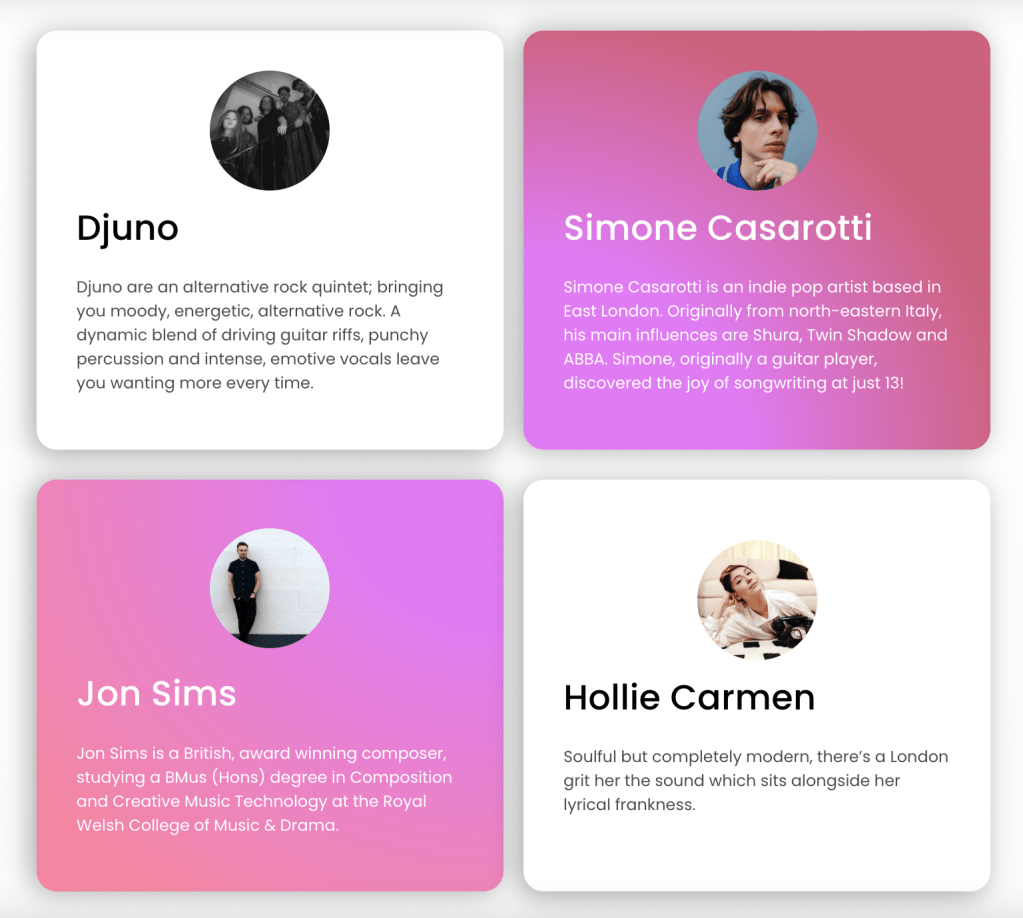
Hollie Carmen (recently changed name to Carmen and The Pearls)
Mateen
& Adriano Desire (he’s a producer and songwriter)
 ARTIST AVENUES